


How Dentists Diagnose and Treat Cavities

Ever wondered what's really going on when your dentist peers into your mouth with that tiny mirror? Have you noticed a dark spot on your tooth and thought, "Is that a cavity?" Or perhaps you're curious about what happens if tooth decay goes untreated?
You're not alone. Tooth decay remains one of the most common dental issues affecting Australians of all ages. In fact, it's something most of us will deal with at some point in our lives. The good news? Modern dentistry has come a long way in detecting and treating cavities before they become serious problems.
In this post, we'll walk you through everything you need to know about how dentists diagnose and treat cavities. From understanding what a cavity actually looks like to exploring your treatment options, we've got you covered. You'll learn about the different types of decay, when it's possible to reverse damage, and what to expect during cavity removal. Plus, we'll share tips on keeping your teeth healthy long after treatment. Let's get stuck into it.
What Is a Cavity? Breaking Down the Basics
What Does a Cavity Look Like?
So, what does a cavity look like exactly? It's a question many people ask, and the answer isn't always straightforward. In the early stages, a cavity might appear as a white or chalky spot on your tooth. This indicates minerals are being lost from the enamel.
As decay progresses, you might notice brown, black, or grey discolouration. Some cavities create visible holes or pits in the tooth surface. Others hide between teeth where you can't see them at all. That's why regular dental check-ups are so important—your dentist can spot what you can't.
Understanding Carious Lesions and How They Form
A carious lesion is essentially the technical term for tooth decay damage. It forms when bacteria in your mouth produce acids that attack tooth enamel. These bacteria feed on sugars from food and drinks, creating a sticky film called plaque.
Over time, repeated acid attacks weaken the enamel. Eventually, this creates a hole—what we commonly call a cavity. The process doesn't happen overnight. It develops gradually, which means there's often a window for intervention.
The Difference Between Arrested Caries vs Active Caries
Not all decay keeps progressing. Understanding arrested caries vs active caries can help you grasp your dental situation better. Active caries is ongoing decay that's actively destroying tooth structure. It typically appears lighter in colour and feels soft when probed.
Arrested caries, on the other hand, has stopped progressing. The arrested caries appearance is usually darker and harder. The arrested caries colour tends to be brown or black, indicating the decay has stabilised. This happens when conditions in the mouth change—perhaps through improved oral hygiene or dietary changes.
Types of Tooth Decay You Should Know About
Class 1 Dental Caries Explained
Class 1 dental caries affects the chewing surfaces of your back teeth. These are the molars and premolars with all those grooves and pits. Bacteria love hiding in these tiny crevices because they're harder to clean properly.
This type of decay is particularly common in children and teenagers. However, adults aren't immune. Regular brushing and dental sealants can help protect these vulnerable areas.
Root Cavity: When Tooth Decay Attacks at the Root
A root cavity develops on the tooth's root surface, usually near the gum line. This type of tooth decay at the root level becomes more common as we age. Why? Because gums naturally recede over time, exposing the softer root surface.
Unlike enamel, root surfaces aren't as resistant to acid attacks. This makes root cavity formation faster and treatment more urgent. If you've noticed sensitivity near your gum line, it's worth getting checked.
Front Tooth Decay: Causes and Concerns
Front tooth decay and tooth decay in front teeth present unique challenges. Beyond the health implications, there's an aesthetic concern. Nobody wants visible decay affecting their smile.
Common causes include frequent snacking on sugary foods, sipping acidic drinks throughout the day, and inadequate brushing. Baby bottle tooth decay in infants is another concern, caused by prolonged exposure to milk or juice.
What Causes Rotten Teeth?
When decay goes unchecked, it can lead to what people call rotten teeth or gross teeth. This severe decay results from long-term neglect of oral hygiene, excessive sugar consumption, or avoiding dental care.
Certain medical conditions, medications that cause dry mouth, and lifestyle factors also contribute. The result isn't just cosmetic—rotten teeth can cause serious pain, infection, and even affect overall health.
How Do Dentists Diagnose Cavities?
Visual Examination: Spotting the Signs
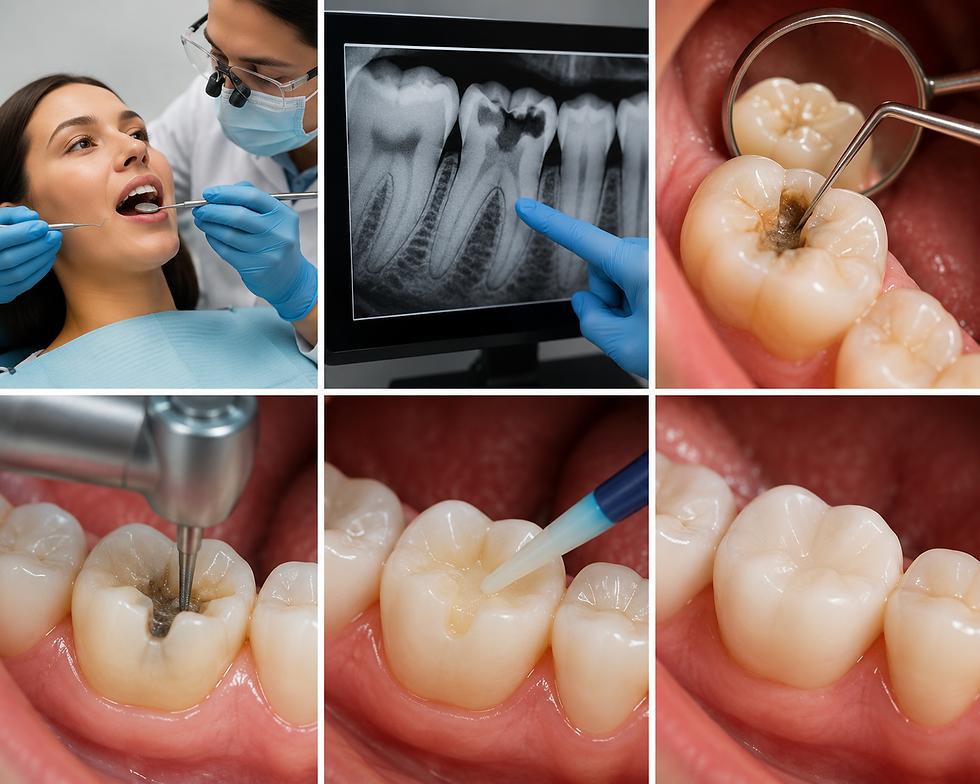
Your dentist's cavity check typically starts with a thorough visual examination. Using a small mirror and good lighting, they'll inspect each tooth surface. They're looking for discolouration, visible holes, and changes in tooth texture.
A dental explorer—that pointy instrument—helps detect soft spots indicating decay. Your dentist will also check for signs of gum disease, which can contribute to decay near the gum line.
X-Rays and Advanced Detection Tools
Not all decay is visible to the naked eye. X-rays reveal cavities hiding between teeth or beneath existing fillings. They also show how deep the decay has penetrated.
Modern dental practices may use additional tools like laser fluorescence devices. These can detect early decay before it becomes visible. The earlier the decay is caught, the simpler the treatment.
Identifying Arrested Caries Appearance and Colour
During examination, your dentist distinguishes between active and arrested decay. They'll assess the arrested caries colour and texture. Darker, harder lesions typically indicate arrested decay that may not need immediate treatment.
This assessment influences your treatment plan. Sometimes monitoring is appropriate; other times, intervention is necessary. Your dentist will explain their findings and recommendations clearly.
Can You Reverse Tooth Decay?
When Is It Possible to Reverse a Tooth Cavity?
Here's encouraging news: you can reverse tooth decay in its earliest stages. Before an actual cavity forms, when decay is still affecting only the enamel surface, remineralisation is possible.
This is why those white spot lesions matter. Caught early, they can be reversed with fluoride treatments, improved oral hygiene, and dietary changes. Once a physical hole develops, however, the damage requires professional treatment.
Arrested Caries Treatment Options
Arrested caries treatment focuses on maintaining the stable state and preventing reactivation. Sometimes this means simply monitoring the lesion during regular check-ups.
In other cases, your dentist might apply fluoride varnish or recommend specific toothpastes. The goal is to keep the decay dormant while protecting the surrounding tooth structure. Silver diamine fluoride is another option that can arrest active decay.
The Truth About Early-Stage Decay
Catching decay early changes everything. At this stage, you might reverse tooth cavity damage without drilling. Fluoride helps rebuild weakened enamel by attracting minerals back to the tooth surface.
Your dentist might recommend prescription-strength fluoride products, dietary modifications, or more frequent cleaning appointments. Taking action early saves you from more invasive procedures later.
Dentist Treatments for Cavities: Your Options Explained
Cavity Removal: What to Expect During the Procedure
When a cavity removal becomes necessary, the process is straightforward. Your dentist will numb the area first—you shouldn't feel pain during cavity removal. They'll then remove tooth decay using a drill or laser.
The decay is carefully extracted, leaving healthy tooth structure intact. The cavity is cleaned and prepared for filling. Most people find the procedure far less daunting than they'd imagined.
Fillings and Restorations
After taking out a cavity, the space needs to be filled. Dental treatments include various filling materials. Tooth-coloured composite resin is popular for visible teeth, while amalgam remains durable for back teeth.
Larger cavities might require inlays, onlays, or crowns. Your dentist will recommend the best option based on cavity size, location, and your preferences. Cost and durability are factors to discuss.
Before and After Tooth Decay Treatment: Real Results
The transformation after treatment can be remarkable. Before and after tooth decay treatment, patients often notice immediate improvement in comfort and appearance. Pain disappears, sensitivity reduces, and confidence returns.
Proper aftercare ensures lasting results. Your dentist will provide specific instructions for caring for your restoration.
Treatment for Severe Cases and Rotten Teeth
Severe decay requires more extensive intervention. This might include root canal therapy if decay reaches the tooth's nerve. In some cases, extraction becomes necessary, followed by replacement options like implants or bridges.
Don't let fear prevent you from seeking help. Modern dentistry offers effective solutions even for severe cases.

How to Prevent Tooth Decay From Returning
Prevention is always better than a cure. Brush twice daily with fluoride toothpaste and floss regularly. Limit sugary snacks and acidic drinks, especially between meals.
Visit your dentist for regular check-ups and professional cleaning. Consider dental sealants for vulnerable teeth. These simple habits make a significant difference in keeping decay at bay.
When Should You See a Tooth Decay Dentist?
Don't wait for pain before booking an appointment. Schedule regular six-monthly check-ups for preventive care. See your dentist promptly if you notice discolouration, sensitivity, or visible holes.
Early intervention saves time, money, and discomfort. Your dental team is there to help, not judge—even if it's been a while since your last visit.
Taking Control of Your Dental Health
Understanding how dentists diagnose and treat cavities puts you in the driver's seat of your oral health. From spotting early warning signs to knowing your treatment options, knowledge truly is power when it comes to protecting your smile.
Remember, tooth decay is largely preventable with good habits and regular dental care. Even when cavities do develop, modern treatments are effective, comfortable, and can restore your teeth beautifully. The key is catching problems early and addressing them promptly.
So, if you've been putting off that dental appointment or ignoring a niggling tooth concern, now's the time to take action. Your future self will thank you. Book a check-up, ask questions, and work with your dentist to keep your teeth healthy for years to come. You've got this!


Comments